
How to Cook Iberico Pork: My Method, Temperatures and Cooking Times
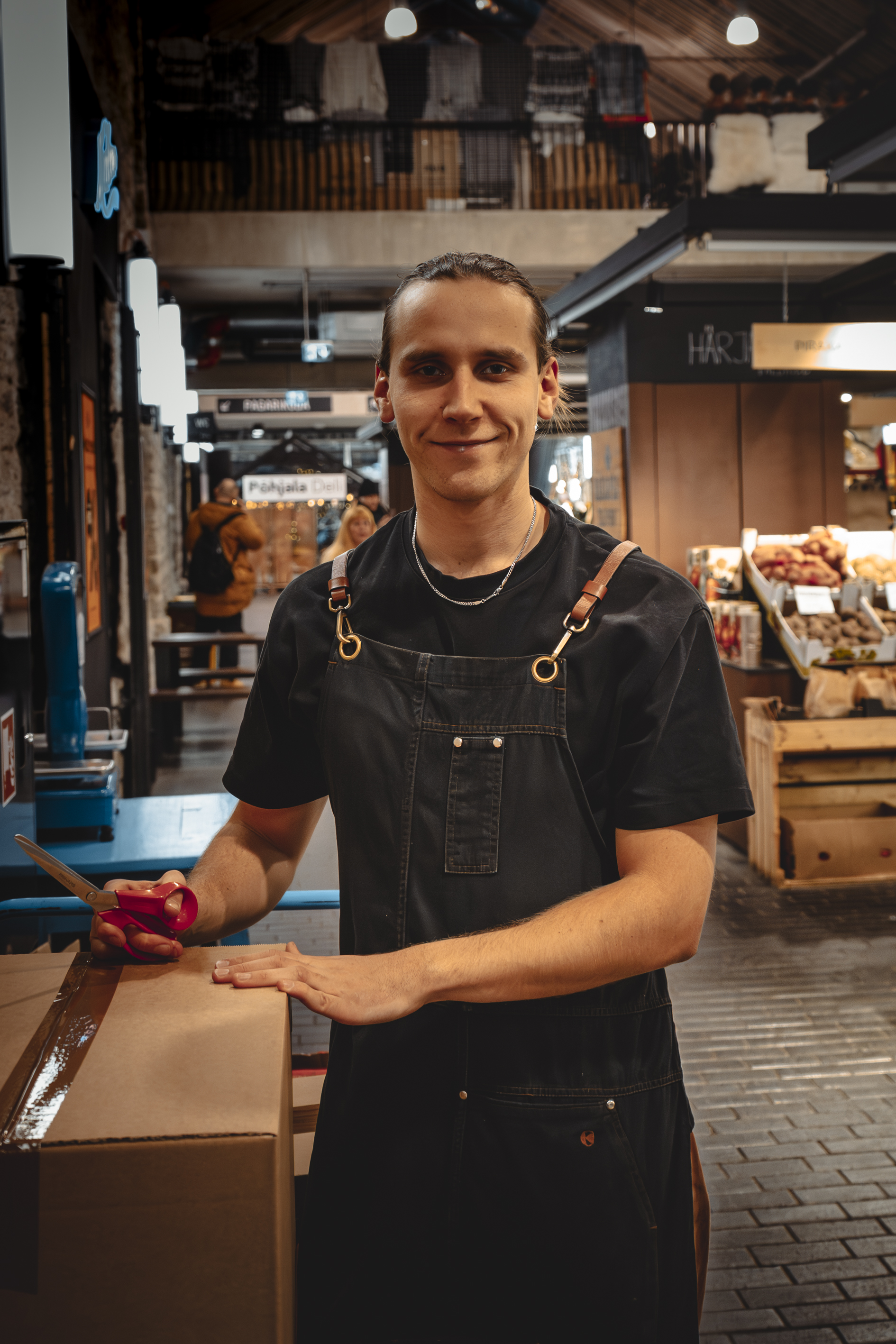
What surprises customers in the shop most is that pork can be eaten pink. With regular pork we're used to cooking it all the way through, but Iberico pork is different.
The Iberian pig isn't a regular pig breed. Its fat builds up between the muscle fibres, not just under the skin, and that changes both the flavour and the way the meat should be cooked. On top of that, the Iberian pig is butchered differently in Spain than we're used to here, which is why the cuts have names like Presa, Pluma and Secreto, which you won't find at a regular meat counter.
Cooking Iberico pork isn't hard once you know a few rules. This article covers how I do it, plus the temperatures and times for each cooking method. At the end there's a summary table you can quickly check in the kitchen.

IMAGE: Iberico pigs on a dehesa / Author: Jamones Blazques
How I cook Iberico pork
Most of the time I cook it quickly in a pan or on the grill. I don't season the meat before cooking; I add salt, pepper and olive oil later. When the meat is done, I let it rest for 3 to 4 minutes, cut it straight away and eat it from the cutting board.
There's one thing to do before that: the meat has to be at room temperature. When the whole piece is the same temperature, it cooks evenly.
Thinner cuts: about 15 minutes, depending on the temperature of your kitchen.
Thicker cuts: take them out of the fridge 30 minutes to 1 hour before cooking.
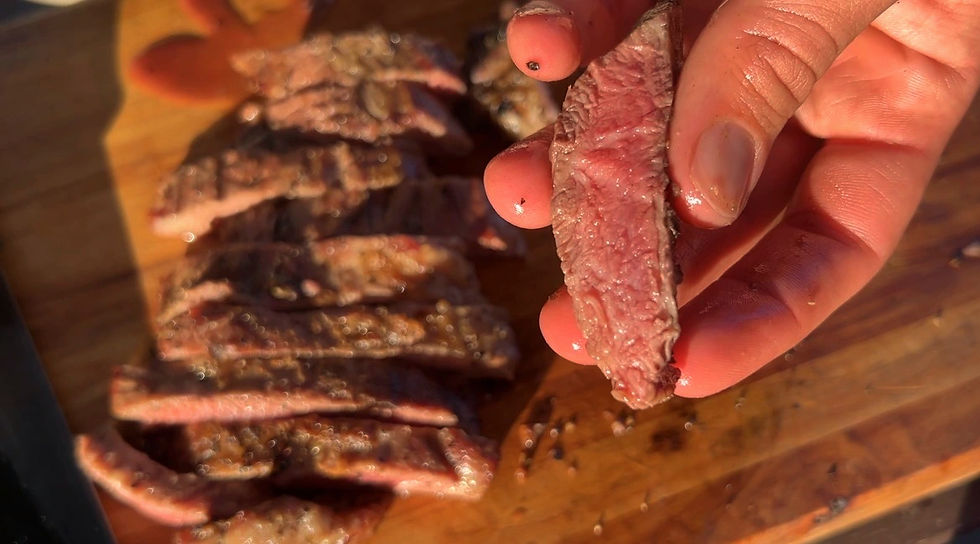
IMAGE: sliced Presa on a cutting board, pink inside
Why Iberico pork stays pink inside
Until 2011, the US food safety authority (USDA) recommended cooking whole cuts of pork to 71 °C (160 °F). Based on new research, the recommendation was changed, and today the safe internal temperature is 63 °C (145 °F) with a 3-minute rest before cutting (USDA temperature chart). During the rest, the meat reaches a fully safe temperature and the juices stay inside. The meat stays slightly pink in the middle, and with Iberico that's the right result.
In restaurants in Spain and Portugal I've been served Iberico that was slightly overcooked. It immediately becomes very similar to regular pork and loses its characteristic juiciness. The value of Iberico is exactly in that juiciness and fat, so overcooking throws a large part of it away.
That's why I always say: if you're unsure, take the meat off the heat earlier. You can always put it back in the pan, but you can't un-cook it.
Presa, Pluma and Karee: how to cook each one
We currently sell three Iberico cuts in our shop. Here is what is worth remembering about each.
Presa
Presa sits between the neck and the shoulder and is one of the most marbled cuts of the Iberian pig. The fat is between the muscle fibres, not around them. If you like marbled beef steak, Presa is the closest thing in pork. Cook Presa like a beef steak: in a pan or on the grill, over high heat for a short time. A larger piece can also go in the oven.
I wrote about Presa and how to slice it in a separate article: Presa Iberica: why it's the best meat you've ever had on the grill.
Pluma
Pluma sits between the shoulder blade and the loin and is one of the most tender cuts. It got its name from its triangular, feather-like shape. The piece is fairly thin, so it works best for quick cooking in a pan or on the grill. Allow 1.5 to 2 minutes per side for every centimetre of thickness.

IMAGE: Iberico pluma / author: Jamones Blazques
Karee
Karee (french rack) is the loin with the ribs. It's a larger piece, 1.8 to 2.5 kg, and can be cooked two ways: over high heat, the same way as a rack of lamb, or in the oven at 175 °C. Either way, check the internal temperature with a thermometer and let the meat rest before cutting.
What to serve with Iberico pork
Most of the time I eat it simply with salt, pepper and olive oil. Good meat doesn't need much more. If you want to add something, fresh romesco sauce or chimichurri work very well.
If you're cooking Iberico for guests, put some Spanish snacks on the table too. The easiest is thinly sliced Iberico chorizo with fresh bread, olive oil and Manchego cheese. Chorizo is a cured sausage, so you don't need to cook it. Let it come to room temperature before serving and the flavours come out better.
5 ways to cook Iberico pork
Pan and grill are the ones I use myself. For larger cuts, the other methods work too. I start with the fastest and end with the slowest.
1. Pan-frying
Heat a cast-iron or good stainless steel pan over high heat and sear the meat quickly on both sides. You get a brown crust outside and very juicy meat inside. You don't need to measure the pan temperature, but aim for about 175 to 200 °C. Timing: 2 minutes per side for every 1 cm of thickness. For example, a 2.5 cm thick Presa needs about 4 to 5 minutes per side.
Best for thinner cuts with plenty of intramuscular fat: Presa, Pluma, Secreto, Abanico, belly steak and tenderloin (solomillo), especially cut into medallions.
[IMAGE: Presa in a cast-iron pan, brown crust | alt text: pan-searing Iberico Presa in a cast-iron pan]
2. Quick grilling
Same idea as the pan, but the heat is usually stronger because the meat is directly over the coals or flame. The grill should be at least 200 °C. The time is slightly shorter: 1.5 minutes per side for every 1 cm of thickness. The same cuts work as in the pan.

IMAGE: Iberico Pluma on a grill
3. Roasting and braising in the oven
Set the oven to 175 °C, weigh the piece and allow 30 minutes per 0.5 kg, or about an hour per kilo. This suits larger cuts: Karee, neck (coppa), Presa, loin (lomo) and tenderloin.
4. Slow grilling (low and slow)
This isn't quick steak grilling but long cooking over lower heat. The grill should be at 120 to 150 °C and the cooking time 3 to 4 hours. The internal temperature with this method can be 63 to 93 °C. Ribs, neck, thick belly and Karee work well.
5. Smoking
Even lower and slower, either in a smoker or on the grill. The temperature is 95 to 120 °C and the meat cooks for 4 to 8 hours. The internal temperature can rise up to 93 °C. Ribs, neck and thick belly work well.
How to tell when Iberico pork is done
Thinner cuts
Thinner pieces are less forgiving of overcooking.
Cook over high or medium-high heat.
About 1.5 to 2 minutes per side for every 1 cm of thickness, depending on the cut and how done you want it.
Check with a meat thermometer; it should read 63 °C.
No thermometer? Use the palm test (see the table below).
Palm test: press the soft part of your right palm under the thumb with the index finger of your left hand. Then bend the fingers of your right hand one by one towards your palm and compare how firm that spot is with the meat.
Doneness | Right hand |
Rare | Palm relaxed and open |
Medium-rare | Index finger bent towards the palm |
Medium | Middle finger bent towards the palm |
Medium-well | Ring finger bent towards the palm |
Well-done | Little finger bent towards the palm |
Medium and thick cuts
Cook over medium or low heat.
Allow 30 minutes per 0.5 kg, or 1 hour per kilo.
Check with a meat thermometer: 63 °C, up to 93 °C for thick pieces cooked slowly.
No thermometer? Poke the meat with a fork or knife. If a lot of juice comes out, the middle is still raw and needs more time. If only a little juice comes out, it's done.
Summary table: Iberico pork cooking times and temperatures
Method | Temperature | Time | Internal temp. | Suitable cuts |
Smoking | Low, 95-120 °C | 4-8 hours | up to 93 °C | Ribs, neck, thick belly |
Slow grilling | Medium-low, 120-150 °C | 3-4 hours | 63-93 °C | Ribs, neck, thick belly, Karee |
Roasting and braising | Medium, 175 °C | 30 min per 0.5 kg | 63 °C | Karee, neck, Presa, loin, tenderloin |
Pan-frying | Medium-high, 175-200 °C | 2 min per side per ~1 cm | 63 °C | Presa, Pluma, Secreto, Abanico, belly steak, tenderloin |
Grilling | High, 200 °C and above | 1.5 min per side per ~1 cm | 63 °C | Presa, Pluma, Secreto, Abanico, belly steak, tenderloin |
Times assume the meat is at room temperature before cooking. A meat thermometer always has the final say.
Frequently asked questions
Can Iberico pork be pink inside?
Yes. According to the USDA, the safe internal temperature for a whole cut of pork is 63 °C with a 3-minute rest. The meat stays slightly pink in the middle, and with Iberico that is exactly the right result.
What temperature should Iberico pork be cooked to?
63 °C in the pan, on the grill and in the oven. With slow grilling and smoking, the internal temperature of thick pieces can rise up to 93 °C, because the goal there is to slowly soften the muscle fibres and fat.
How long should I pan-fry Presa?
About 2 minutes per side for every centimetre of thickness. A 2.5 cm thick Presa needs about 4 to 5 minutes per side. Let the meat rest for 3 to 4 minutes before cutting.
Where to buy Iberico pork in Tallinn
Presa, Pluma and Karee are available in our shop at Balti Jaama Turg (Kopli tn 1). Order from the web shop and pick up, or buy directly in store. Besides meat, the shop also has other Spanish food: jamón, cheese, olives, olive oil and wine.


Comments